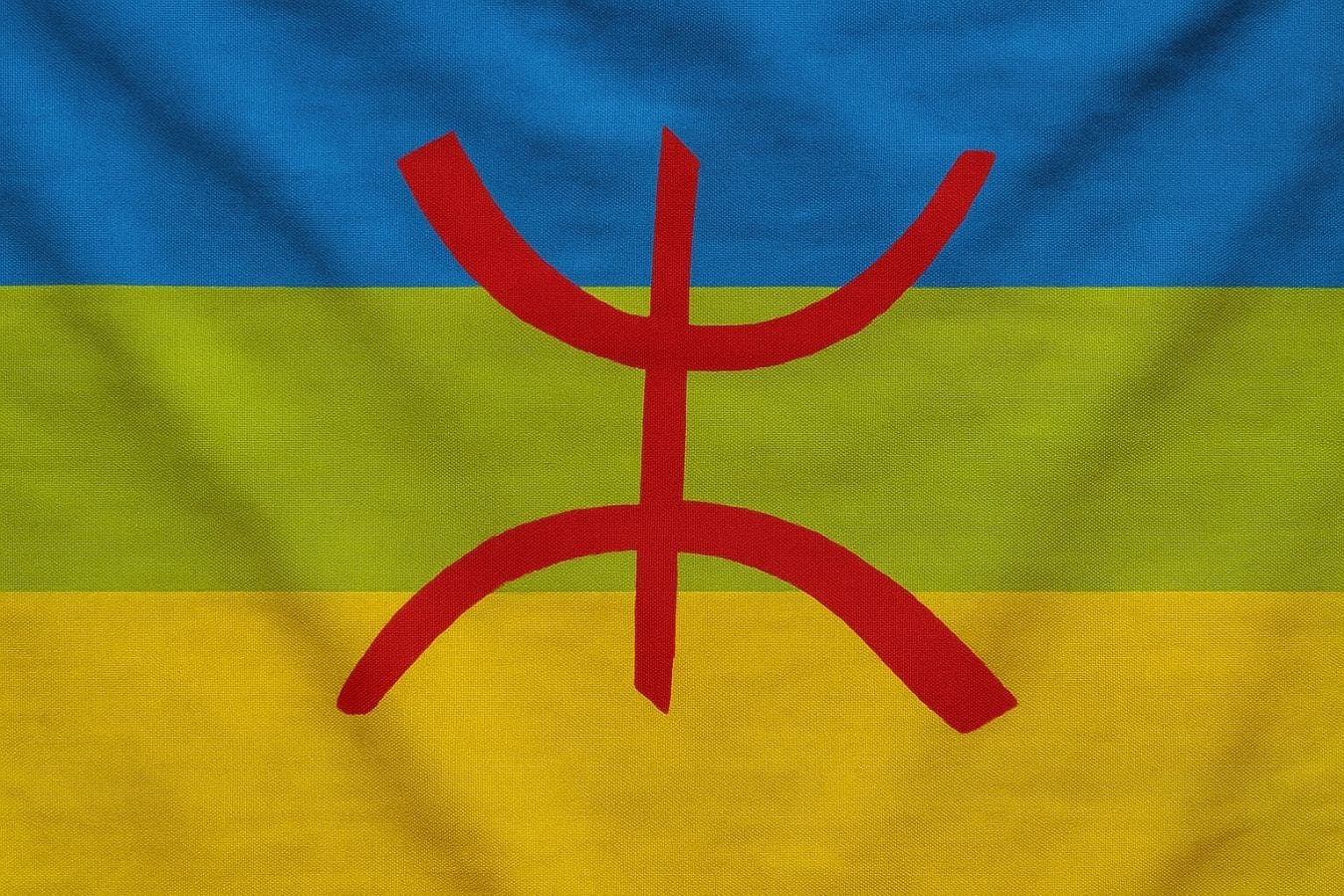
Amazigh identity in Morocco draws strength from North Africa’s deep Indigenous roots. For decades, however, the state has marginalized this identity through colonial legacies, Arabization campaigns, and the rise of political Islam. Nevertheless, Amazigh culture and the Tamazight language endure—resilient, vibrant, and unbroken.
The Myth of an Arab Morocco
State institutions, schools, and media consistently promote a national narrative that frames Morocco as an Arab nation—Arabized through early Islamic conquests and naturally part of the “Arab world.” As a result, this version of history either romanticizes Amazigh culture as folklore or erases it entirely.
In reality, Amazigh people built Morocco. Long before Islam reached the region, they founded kingdoms, led resistance movements, developed political systems, and shaped the land’s identity. Thus, their language, connection to the land, and culture of defiance form Morocco’s true foundation—not its fringe.
Arabization: A Strategy of Erasure
Arabization in Morocco did not emerge organically. Instead, post-independence leaders embraced pan-Arabist ideologies, especially those exported from Egypt under Nasser and the Muslim Brotherhood. Consequently, they used Arabization to construct a unified Arab-Islamic identity.
The state imposed Arabic in schools, government offices, and media. Meanwhile, officials excluded Tamazight from education and public life. They banned Amazigh names in civil registries and neglected Indigenous regions. Ultimately, these policies aimed to suppress Morocco’s African and Amazigh character in favor of a pan-Arab identity.
Political Islam and the Cultural Assault
Islamist movements delivered a second blow to Amazigh identity. Salafi and Brotherhood ideologues preached that linguistic and cultural diversity threatened religious unity. Therefore, they branded Amazigh traditions as pagan and condemned Tamazight as un-Islamic.
Rather than confronting this cultural assault, the Moroccan state often enabled it. Leaders allowed Islamists to undermine Amazigh activism and distract from demands for social justice. Together, Arab nationalism and political Islam attempted to silence Indigenous voices and erase centuries of cultural depth.
Tamazight: A Language Reclaimed
In 2011, Morocco amended its constitution and recognized Tamazight as an official language. While this step marked progress, the state has failed to implement it meaningfully.
Courts continue to operate solely in Arabic. Furthermore, public services do not support Tamazight speakers. Schools still teach children a whitewashed history that denies their ancestry. In effect, officials maintain a monocultural framework and treat Tamazight as an outsider language on its own soil.
The Amazigh Awakening: From Silence to Strength
Despite decades of repression, the Amazigh movement has reignited. A new generation of artists, educators, and activists has reclaimed the language, revived ancestral traditions, and reshaped the public discourse.
Importantly, this awakening rejects false choices. Amazigh identity does not attack Islam or Arabic—it simply refuses to disappear under them. Instead, it calls for a Morocco that embraces its full identity: African, Amazigh, and proudly diverse.
A Path Toward Truth and Inclusion
To achieve true justice, Morocco must confront its history honestly. Indeed, the Amazigh people are not a cultural footnote or regional minority. They built this land, defended its mountains, and enriched its soul.
Therefore, recognizing Amazigh heritage will not fracture national unity—it will heal it. By embracing its Indigenous foundation, Morocco can build an inclusive future rooted in truth, dignity, and democratic strength.
 Related Reads
 Related Reads
➤ Amazigh New Year: Why Yennayer Matters
➤ The Symbolism Behind Amazigh Tattoos
➤ The Harvest Festivals of Morocco: Tribes celebrating bounty