

Moroccan tea, often referred to as “Atay,” symbolizes hospitality, warmth, and community. The act of preparing and sharing tea runs deep in Moroccan culture. A traditional Moroccan tea ceremony offers more than just a drink—it becomes an art form, a moment of connection, and a reflection of the country’s centuries-old customs.
Therefore, hosting a Moroccan tea ceremony provides an opportunity to share a rich cultural tradition with friends and family. It creates a space for conversation, reflection, and the joy of hospitality. In this post, we will guide you through the steps to host an authentic Moroccan tea ceremony—from selecting the ingredients to mastering the art of pouring the perfect cup of mint tea.
Ingredients You’ll Need
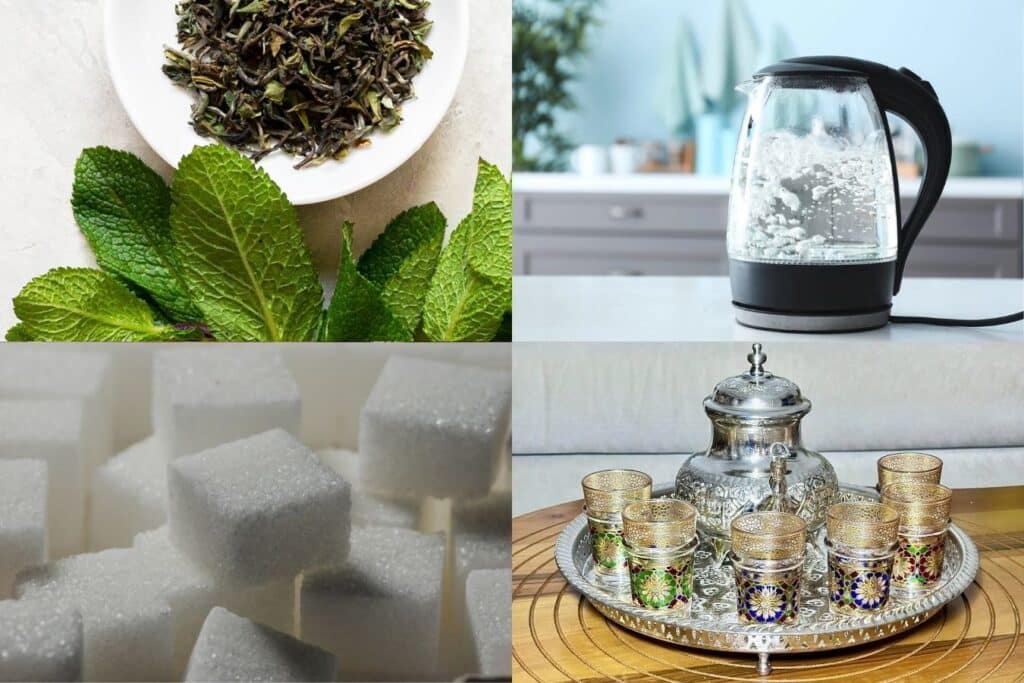
Before you begin the ceremony, it’s essential to gather the key ingredients and tools. Moroccan tea is renowned for its strong, sweet flavor and refreshing mint taste. So, make sure you have the following on hand:
1. Green Tea
The base of Moroccan tea is green tea—typically a Chinese variety like Gunpowder tea. This tea carries a slightly bitter taste, which is then balanced by the sweetness of sugar and the coolness of mint.
2. Fresh Mint
Fresh mint plays a vital role in the Moroccan tea experience. It adds a refreshing aroma and a cool, crisp flavor, which suits the hot climate perfectly. You’ll want a large bunch of mint leaves—enough to fill the teapot generously.
3. Sugar
Since Moroccan tea is known for being quite sweet, you’ll need plenty of sugar. Traditionally, Moroccans use a lot. While you can adjust to taste, remember Moroccan tea almost always arrives sweet.
4. Water
Always use fresh, clean water for boiling. Bring the water to a boil, then allow it to cool slightly before adding it to the tea leaves. This step matters because it helps extract the best flavor from the green tea.
5. Teapot and Glasses
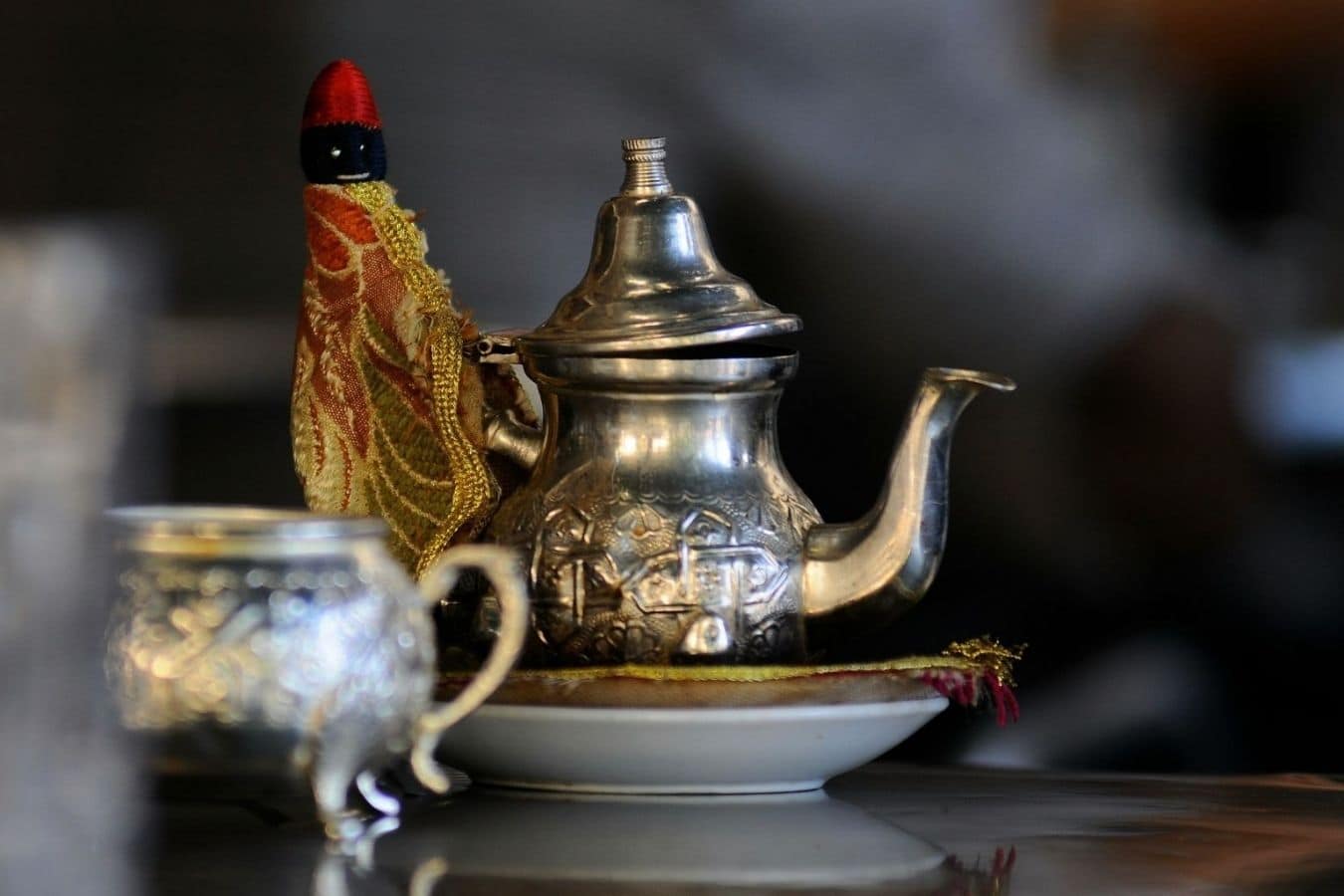
Use a traditional Moroccan teapot, often made of metal with a narrow spout and round body. You’ll also need small glasses to serve the tea. These are usually small so guests can enjoy multiple refills during the ceremony.
Step-by-Step Guide to Hosting a Moroccan Tea Ceremony
1. Prepare the Teapot and Leaves
Start by rinsing the Moroccan teapot with boiling water to warm it up. Then, add 1–2 tablespoons of green tea leaves to the teapot. Pour a small amount of boiling water into the pot and swirl it gently to rinse the leaves. This removes dust and reduces bitterness. Afterward, discard the water.
2. Add Fresh Mint and Sugar
Next, add a generous bunch of fresh mint to the teapot. Make sure the mint fills the teapot, but not so tightly that it blocks water flow. Then, follow by adding a generous amount of sugar. Traditionally, 6–10 tablespoons are used, though you can adjust it based on your guests’ preferences.
3. Add Boiling Water
Now, pour boiling water into the teapot, filling it about halfway. Let the tea steep for a few minutes. Once it has steeped properly, gently stir to blend the flavors of the tea, mint, and sugar.
4. Taste and Adjust
Since Moroccan tea is all about balance—sweet, strong, and aromatic—it’s now time to taste it. If it needs more sweetness, add sugar. If it tastes too strong, simply add more hot water. Adjust the balance until it suits your taste perfectly.
The Art of Pouring Moroccan Tea
Pouring Moroccan tea in the traditional way is an art form in itself. This step isn’t just about serving—it reflects tradition, aesthetics, and hospitality.
1. The Right Technique
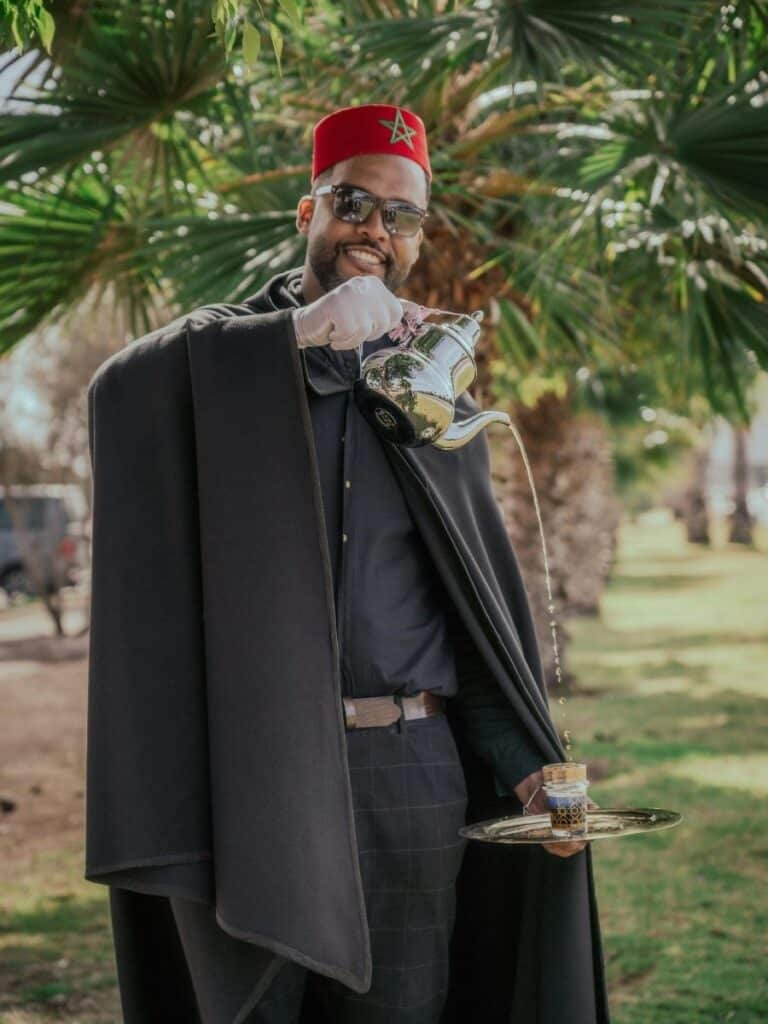
Pour Moroccan tea from a height to create a frothy surface. Hold the teapot high above the glasses, letting the tea cascade down and form bubbles. This technique also aerates the tea, improving the taste and enhancing the visual presentation.
2. Multiple Refills
Typically, Moroccans serve tea in several rounds. Each round offers a slightly different strength. After the first pour, let guests sip their tea, then refill the glasses. Although the tea becomes weaker with each round, the flavor remains rich and refreshing.
3. Serve with Style
Traditionally, the host pours the tea into ornate glasses decorated with patterns or metallic finishes. These small glasses let guests drink the tea in few sips. As the host, make it a point to pour with grace and care, ensuring each guest feels honored and included.
Traditional Accompaniments for Moroccan Tea
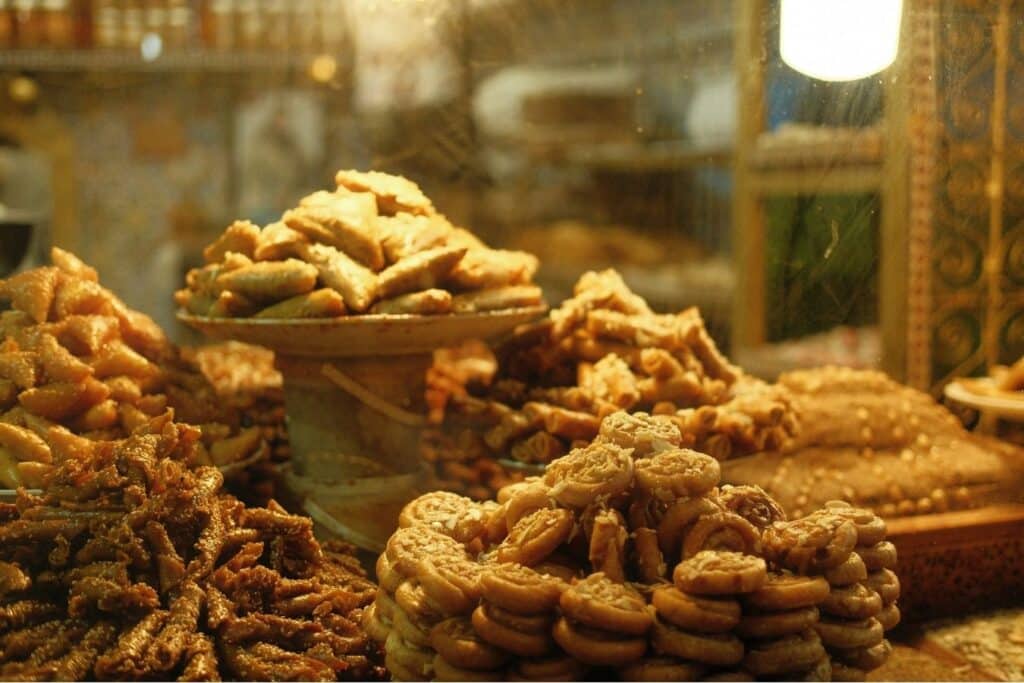
Although Moroccan tea stands well on its own, it is often served with a variety of snacks and pastries to enrich the experience. These include:
Moroccan pastries: Sweet, flaky delights like baklava or almond-filled briouats.
Olives and nuts: A savory mix that balances the tea’s sweetness.
Bread and jam: Fresh, soft Moroccan bread served with honey or jam adds a comforting, homey touch.
Together, these accompaniments heighten the sense of hospitality and encourage lively conversation and social interaction.
The Cultural Significance of Moroccan Tea
In Morocco, tea means more than just refreshment—it expresses hospitality and generosity. Offering tea to guests is a long-standing tradition that shows respect and care. Even in the simplest setting, serving tea remains an essential part of Moroccan life, creating space for connection and storytelling.
Moroccan tea also represents community and family. It is often shared among loved ones, strengthening bonds and fostering moments of unity. The ceremony unfolds slowly and deliberately, encouraging everyone to pause, reflect, and enjoy meaningful company.
Hosting a Memorable Moroccan Tea Ceremony
Ultimately, hosting a traditional Moroccan tea ceremony is a beautiful way to bring Moroccan culture into your home. By following the simple steps in this guide, you can create an experience that is both memorable and authentic for your guests. This ritual provides an opportunity to extend generosity, showcase hospitality, and create lasting memories with those you cherish.
Whether you enjoy mint tea’s soothing aroma on a hot afternoon or serve it at a festive gathering, the Moroccan tea ceremony encourages you to slow down, connect, and appreciate life’s simple pleasures.
Related Reads
➤ The Meaning Behind Tea in the Desert: A Symbol of Hospitality

