Tattoos have long served as forms of expression, identity, and storytelling across many cultures. In Morocco, one of the most meaningful tattoo traditions belongs to the Amazigh people—the Indigenous Berbers who have shaped North Africa’s culture, language, and history for millennia. For them, tattoos carry deep symbolism, reflecting ancestral ties, beliefs, and a close relationship with nature.
Unlike many Western tattoos chosen for style or personal expression, Amazigh tattoos represent cultural identity, spiritual protection, and social rank. These symbolic markings are woven into Amazigh heritage, with designs passed down through generations. Each tattoo tells a story about the person who wears it.
In this post, we explore the rich symbolism behind Amazigh tattoos and their significance for those who carry them.
Amazigh Tattoos: A Window into Identity and Tradition
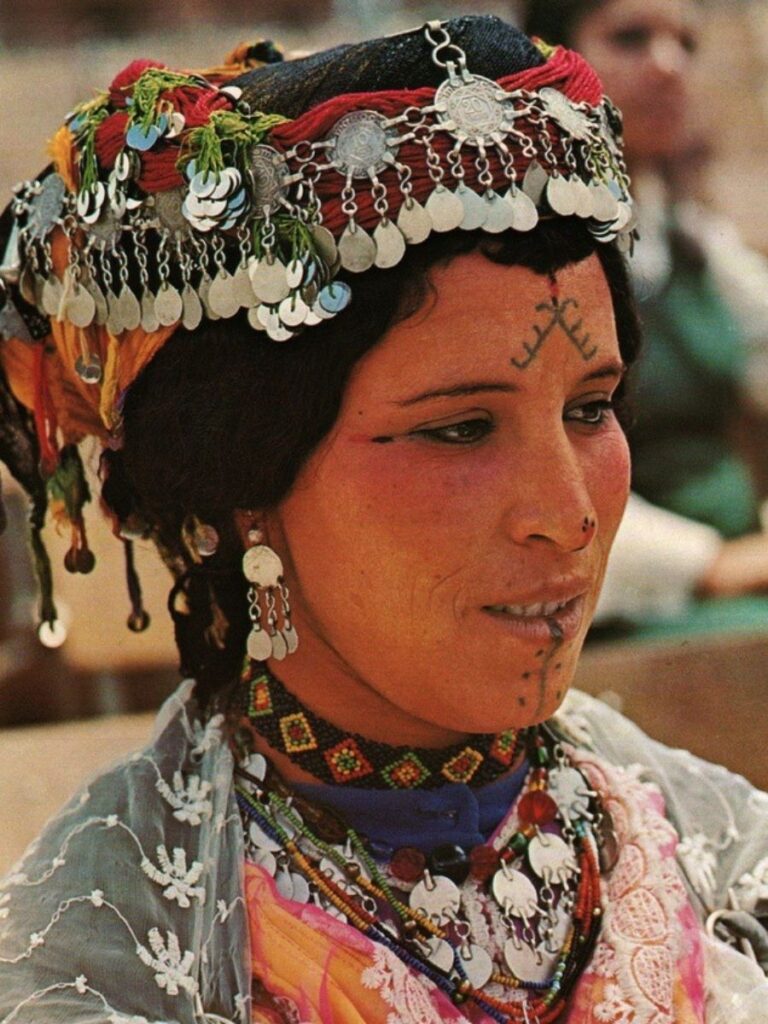
The Amazigh people have a history stretching back thousands of years. Tattoos have remained a meaningful part of their cultural practices. Women traditionally wear most of these tattoos, though some men also carry them. Tattoos often serve protective or healing purposes. Each design reflects personal elements like family roots, spiritual beliefs, or important life events.
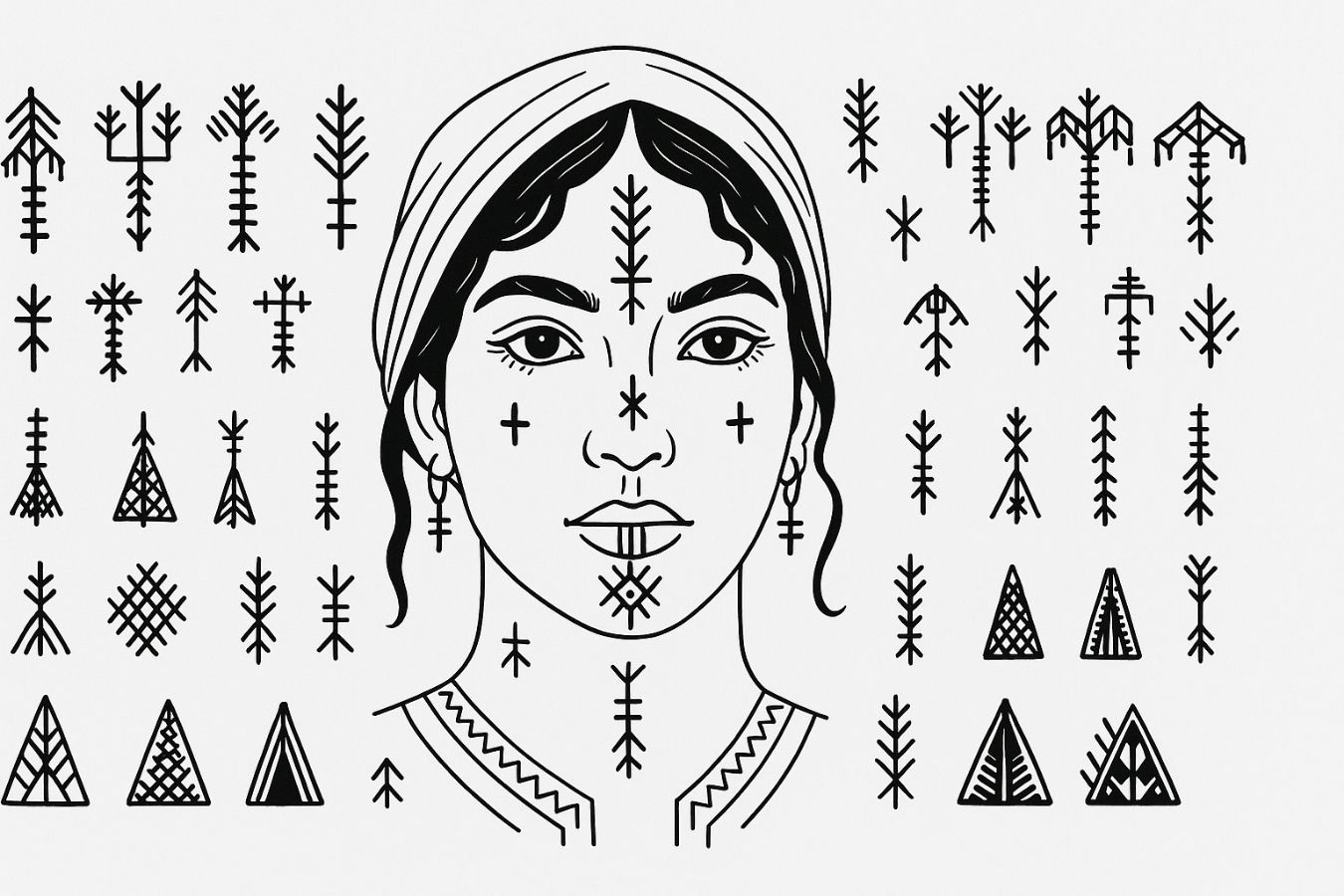
You’ll often see these tattoos on the face, hands, arms, and legs. Designs and placements vary across regions. Placement carries as much meaning as the symbol itself. For instance, tattoos on the forehead or chin offer spiritual protection. In contrast, tattoos on arms or hands often represent tribal connections or social status.
The Meaning of Common Amazigh Tattoo Designs
Each Amazigh tattoo reveals something unique about its wearer. Some designs are inherited from family traditions, while others mark personal experiences. Below are common motifs and their meanings:
1. The Diamond or Square Motif
This shape is one of the most widespread in Amazigh tattooing. Often placed on the forehead, it symbolizes spiritual strength and protection. It guards against evil spirits and misfortune. In some interpretations, it also represents the earth, grounding the wearer in the physical world.
2. The Cross or X-Shaped Design
Seen frequently on hands or forearms, this symbol reflects harmony between opposites—like male and female forces. It may also stand for the sun and moon, symbolizing balance and nature’s cycles. Many Amazigh view it as a sign of fertility and vital energy.
3. The Eye of Protection
This motif resembles the evil eye used in other cultures. Often placed on the cheeks or forehead, it shields the wearer from envy and negative energy. People believe it brings good fortune and spiritual safety.
4. The Spiral or Snail Design
The spiral often appears on arms or legs. It represents life’s continuity—birth, death, and rebirth. Some see it as a symbol of the sun’s movement, linking time, nature, and the individual.
5. The Fish or Scales
The fish motif reflects abundance, fertility, and the importance of water. In Amazigh tradition, fish represent life-giving forces. Their scales often symbolize wealth. For some, this design shows a connection to the sea or nature itself.
Tattoos as a Rite of Passage
For many Amazigh women, tattooing marks a rite of passage. It often signals a transition into adulthood. These tattoos are typically applied in family settings and accompanied by music, prayers, or rituals. The process honors the woman’s journey into a new life phase.
As a woman grows, her tattoos may evolve too. New ones might commemorate milestones like marriage, childbirth, or personal achievements. Over time, her tattoos become a visual autobiography. They narrate her values, memories, and spirituality.
Tattoos can also reflect social status. The number and location of a woman’s tattoos often indicate her role or reputation in the community. In some areas, elaborate tattoos show high standing. Simpler markings may reflect modesty or different regional customs.
The Decline of Traditional Tattooing
Tattooing has declined in many parts of Morocco and North Africa, especially in cities. As society modernized, attitudes shifted. Traditional tattooing became less common. Older generations often remain the last to carry these ancestral symbols.
Yet, interest in Amazigh tattoos is growing again. Young people are reconnecting with their heritage. Many artisans now create modern designs inspired by traditional symbols. This fusion helps preserve the art while making it relevant for today.
The Spiritual and Cultural Legacy of Amazigh Tattoos
Even as tattooing fades in some regions, Amazigh tattoos continue to hold deep meaning. For many wearers, they serve as a link to ancestors and traditions. These symbols remind people of their identity, beliefs, and origin.
In today’s fast-changing world, Amazigh tattoos highlight the beauty of cultural heritage. They carry stories of resilience, faith, and unity with nature and spirit.
Amazigh tattoos are more than decoration. They represent a way of life, a belief system, and a deep connection to one’s roots. Whether reflecting protection, fertility, or identity, these tattoos embody values passed down through generations.
While the art may fade in some places, its legacy endures. Amazigh tattoos continue to express cultural pride and the enduring strength of an ancient people.
Related Reads
➤ Amazigh New Year: Why Yennayer Matters
➤ Amazigh Identity: Between Marginalization and Resilience
➤ History & Identity: The Heartbeat of Morocco’s Rich Heritage

